China’s lithium and sodium battery industry is moving from factory expansion toward sharper technical competition. The country now supports a broad supply chain, including cathode materials, anode materials, separators, cells, battery management systems, and recycling. This article examines China’s Top 10 Lithium Sodium Battery Manufacturers through practical criteria: chemistry, energy density, cycle life, manufacturing scale, safety testing, customer applications, and supply-chain resilience.
Dr. J. M. Tarascon, a respected battery scientist, has emphasized, “The best battery is the one that is best adapted to its application.” That principle matters here. A lithium-ion cell may suit a long-range electric vehicle, while a sodium-ion cell may fit a city bus, stationary storage cabinet, or low-temperature application. The choice is rarely simple. It depends on cost, charging behavior, available materials, operating temperature, and expected service life.
Look beyond production capacity.
A large factory does not automatically deliver dependable batteries. Real performance appears in test records, field data, warranty policies, and customer feedback. This introduction also recognizes an uncomfortable limitation: public company information is uneven, and rankings can change quickly as new plants begin production. Some manufacturers report impressive laboratory results, but commercial deployment may tell a different story. Readers should therefore compare verified specifications rather than rely on promotional claims. The companies discussed below represent important strengths within China’s developing Lithium Sodium Battery sector, but no manufacturer is ideal for every project.
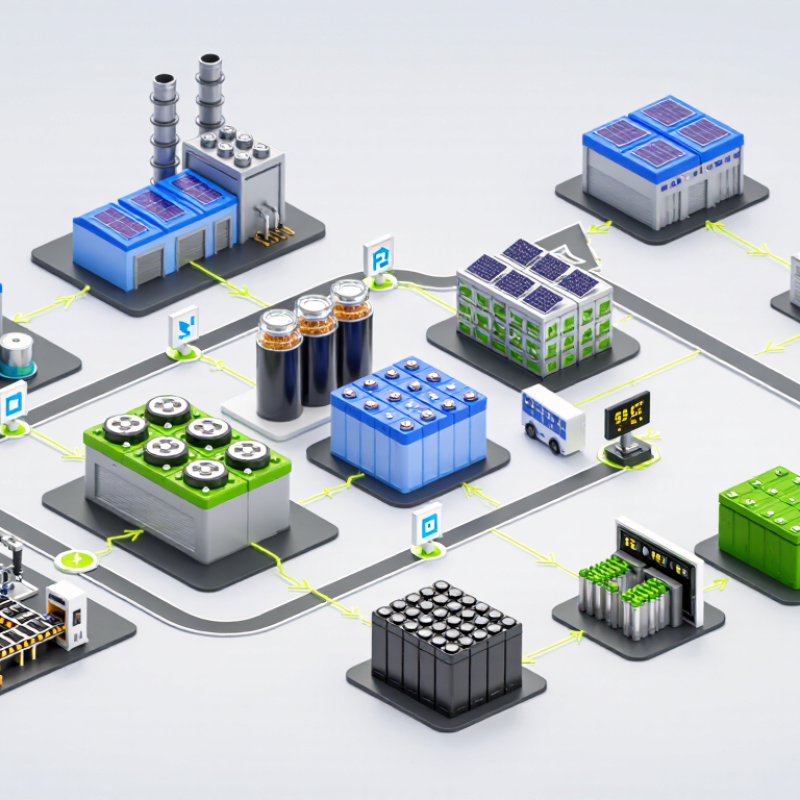
Lithium-sodium batteries represent two related but distinct energy-storage pathways. Lithium-ion cells usually provide higher energy density, making them suitable for electric vehicles, portable electronics, and compact backup systems. Sodium-ion cells use more widely available sodium-based materials. Their lower material cost may support large stationary storage, especially where weight matters less.
The chemistry affects performance. Lithium cells can deliver strong range and fast response, but raw-material prices and supply concentration remain practical concerns. Sodium cells often tolerate cold conditions well and may reduce dependence on scarce minerals. Their energy density is still generally lower. That difference can mean a heavier battery pack for the same usable capacity. Small detail, large consequence.
From an engineering view, the battery is only one part of the system. Thermal control, battery-management software, charging limits, and cell consistency influence safety and service life. Independent testing should measure capacity retention, cycle performance, abuse resistance, and operation across realistic temperatures. Laboratory results can look impressive. Field conditions are less polite. A delivery vehicle may face winter starts, repeated fast charging, and uneven loads in one week. Market adoption will therefore depend on total ownership cost, recycling routes, manufacturing quality, and application fit. Neither chemistry wins everywhere. Careful selection still matters.
Technology, performance, supply-chain, and market-role comparison without company or brand information
| No. | Data Dimension | Lithium-Ion Batteries | Sodium-Ion Batteries | Market Role and Manufacturing Significance |
|---|---|---|---|---|
| 1 | Primary Charge Carrier | Lithium ions move between the cathode and anode during charging and discharging. | Sodium ions move between the cathode and anode using the same general rocking-chair battery principle. | Sodium-ion production can use many established lithium-battery manufacturing processes, although cell materials and process parameters require adaptation. |
| 2 | Main Cathode Chemistries | Common chemistries include lithium iron phosphate and layered lithium-metal oxides such as nickel-manganese-cobalt materials. | Common chemistries include layered sodium transition-metal oxides, Prussian blue or white analogues, and polyanionic compounds. | Cathode selection determines cost, voltage, cycle life, thermal behavior, and the suitability of a product for different applications. |
| 3 | Typical Anode Material | Graphite is widely used in commercial cells; lithium titanate is used in some fast-charge and long-life designs. | Hard carbon is the leading commercial anode option because sodium ions cannot be reversibly stored in conventional graphite in the same manner as lithium ions. | Anode manufacturing is a major area of process development, quality control, and supply-chain localization for sodium-ion cells. |
| 4 | Typical Cell-Level Energy Density | Approximately 120–280 Wh/kg, depending on chemistry, form factor, design, and operating requirements. | Approximately 90–160 Wh/kg for current and near-term commercial designs, with variation by chemistry and cell format. | Lithium-ion remains stronger where weight and volume are critical; sodium-ion is more competitive in stationary and weight-tolerant applications. |
| 5 | Material Availability | Supply chains rely on lithium and may also require nickel, cobalt, manganese, copper, graphite, or phosphate depending on chemistry. | Sodium is widely available from common salts and seawater, while some designs reduce or avoid nickel and cobalt; hard carbon and other specialty materials are still required. | Material abundance supports sodium-ion diversification, but manufacturing scale, precursor purity, and processing capacity remain important cost factors. |
| 6 | Low-Temperature Performance | Performance can decline substantially at low temperatures because ion transport and charge acceptance become slower. | Some sodium-ion chemistries maintain comparatively strong low-temperature power and capacity retention, although results depend on cell design and electrolyte formulation. | Low-temperature capability can support cold-climate storage, backup power, and selected mobility uses, but product-level validation is still essential. |
| 7 | Cycle-Life Potential | Often ranges from about 1,000 to more than 6,000 full cycles, depending on chemistry, depth of discharge, temperature, and charging conditions. | Often ranges from about 1,000 to more than 4,000 full cycles in reported designs, with substantial variation among chemistries and operating conditions. | Both technologies can serve long-life applications; warranty performance must be assessed using standardized testing rather than chemistry alone. |
| 8 | Safety Considerations | Thermal-runaway risk exists and must be managed through cell chemistry, separators, battery-management systems, thermal control, and mechanical protection. | Thermal behavior can be favorable in some formulations, but sodium-ion cells are not risk-free and require comparable electrical, thermal, and mechanical safeguards. | Manufacturers compete through safety validation, abuse testing, pack architecture, monitoring accuracy, and compliance with transport and storage standards. |
| 9 | Cost and Supply-Chain Position | Benefits from mature large-scale production, established suppliers, and extensive manufacturing experience, although raw-material prices can fluctuate. | Offers potential raw-material advantages, but early-stage production, lower volumes, hard-carbon processing, and new quality systems can offset part of the benefit. | Sodium-ion is best viewed as a complementary technology that can reduce dependence on lithium-based supply chains rather than an immediate replacement for every lithium-ion segment. |
| 10 | Priority Market Applications | Electric vehicles, consumer electronics, power tools, industrial equipment, renewable-energy storage, and backup systems. | Stationary energy storage, low-speed vehicles, two- and three-wheelers, short-range mobility, backup power, and applications where cost or low-temperature performance is prioritized. | Manufacturers are likely to use a multi-chemistry portfolio, matching lithium-ion and sodium-ion cells to energy density, cost, safety, temperature, and service-life requirements. |
Note: Performance ranges are indicative industry ranges rather than specifications for any individual manufacturer. Actual results vary according to cell chemistry, electrode loading, format, operating conditions, and battery-management strategy.
Compare chemistry with the real application, not only the quoted price. Lithium-ion usually offers higher energy density. Sodium-ion may reduce dependence on scarce materials. Its lower energy density can limit vehicle range. For grid storage, safety and cost may matter more. The “best” chemistry is not universal.
Request audited production capacity, recent output records, and cell traceability. Advertised capacity may describe equipment, not actual production. Ask for batch numbers and inspection records. A factory’s busy appearance proves little. I would remain skeptical.
Review energy density, cycle life, charging speed, and failure rates. Request test conditions, including charge rate and depth of discharge. Confirm the sample size and testing temperature. Check results at 0°C and 45°C. Numbers without conditions are weak evidence.
Independent testing can reveal differences between laboratory claims and field performance. Test capacity, cycle life, charging behavior, and safety performance. Use realistic temperatures and operating patterns. One small sample cannot represent every production batch. That limitation matters.
Inspect the pilot line and production areas. Look for dust control, controlled humidity, consistent welding, and documented inspections. Check how workers identify defective cells. Ask how aging problems are recorded. A polished showroom is not enough.
Request performance data at low temperatures, especially near 0°C. Check energy density, charging limits, and available capacity. Sodium-ion batteries may suit backup power and some storage projects. Their lower energy density still requires more physical space. Cold testing can expose overlooked weaknesses.
Request evidence of ISO-based quality systems and third-party safety testing. Check transport documents and destination-market requirements. Confirm packaging, labeling, and electrical safety details. Documents should match the supplied cell model. A missing document may become an expensive delay.
Read terms covering capacity loss, cycle limits, replacement duties, and testing methods. Confirm who pays for inspection, shipping, and replacement. Ask what happens after 2,000 cycles. The answer may be uncomfortable. That is exactly why it matters.
Treat the quotation as one part of the total cost. Check whether certification, packaging, software, testing, and support are included. Compare warranty assumptions and delivery conditions. A cheaper pack may need more space or earlier replacement. Low price can hide practical costs.
This article explores the development, structure, and practical value of Lithium Sodium Battery technology, highlighting how it combines lithium-based performance with sodium’s broader resource availability and potential cost advantages. It explains key features such as energy density, safety, charging behavior, cycle life, temperature adaptability, and material sustainability, while also discussing the technology’s emerging role in energy storage, electric mobility, backup power, and industrial applications.
The article also presents a structured review of China’s top 10 Lithium Sodium Battery manufacturers without focusing on brand promotion. It explains how global buyers can evaluate manufacturers by examining research capabilities, production scale, quality control, testing systems, customization services, supply-chain stability, and after-sales support. In addition, it outlines common product categories, manufacturing capabilities, market trends, and important selection considerations, helping readers compare suppliers objectively and understand the future opportunities and challenges of this developing battery sector.

 Grenergy